

01 Mar We have been building the nautical history of Lake Como since 1865 with our boats
We have been building the nautical history of Lake Como since 1865 with our boats
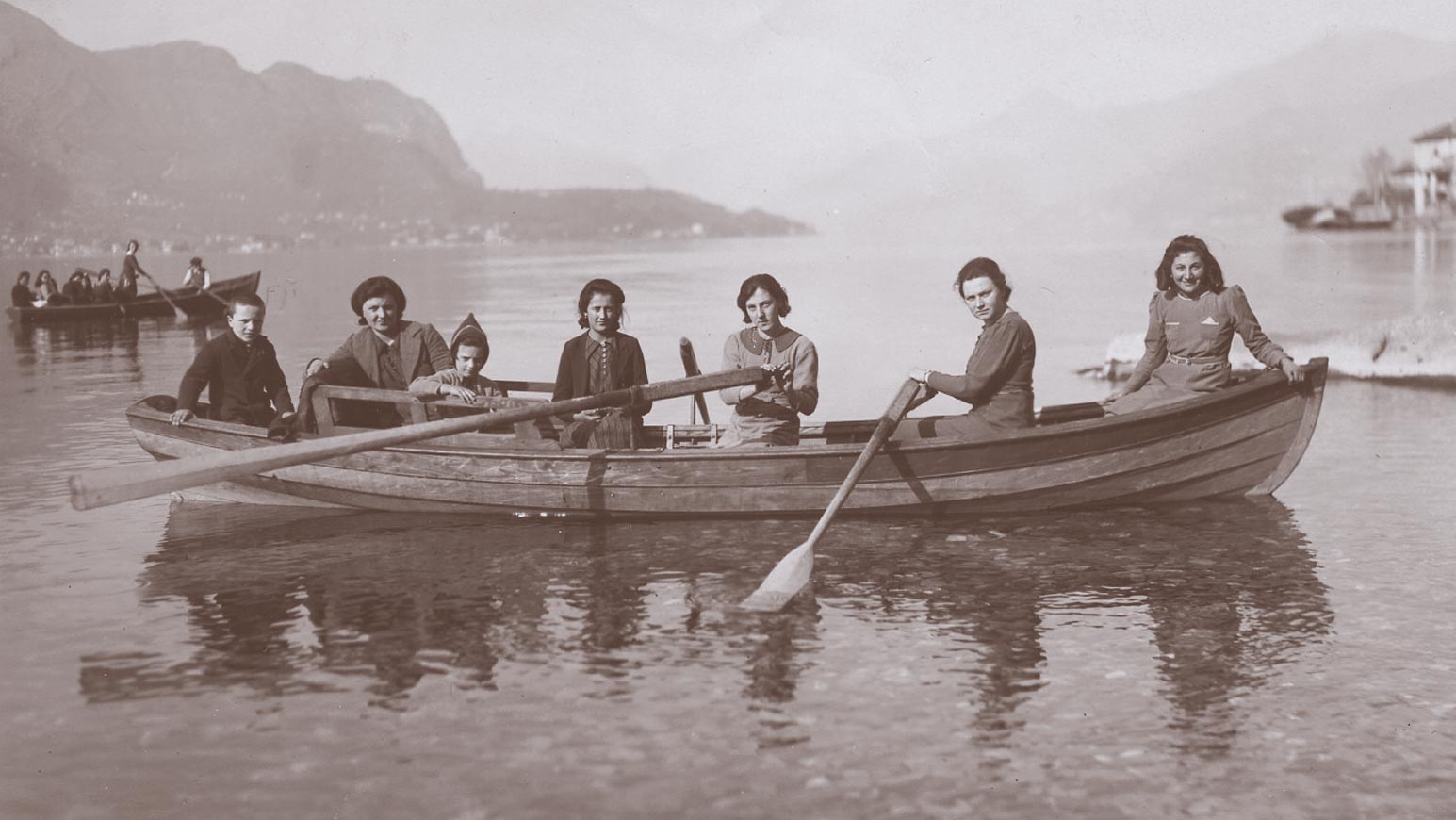
The Matteri family’s boatbuilding heritage dates back to 1865, when Giovanni Mostes began crafting the first boats along the shores of Lake Como, one of the most enchanting landscapes in Europe.
Born in Molina, a small mountain village overlooking the lake, Giovanni travelled along the beaches of the Lario constructing simple yet sturdy boats designed for fishing and for transporting animals and goods. At the time, during the Industrial Revolution, the exchange of raw materials and manufactured products was gradually expanding throughout Italy. The narrow roads surrounding the lake, often unpaved and covered with cobblestones, made land transportation slow and difficult, particularly for bulky cargo. As a result, the lake became the region’s primary route of communication.
Working alongside his young son Enrico Mostes, Giovanni soon specialized in the repair and maintenance of ferries and passenger vessels, laying the foundations of a shipbuilding tradition destined to endure for generations.
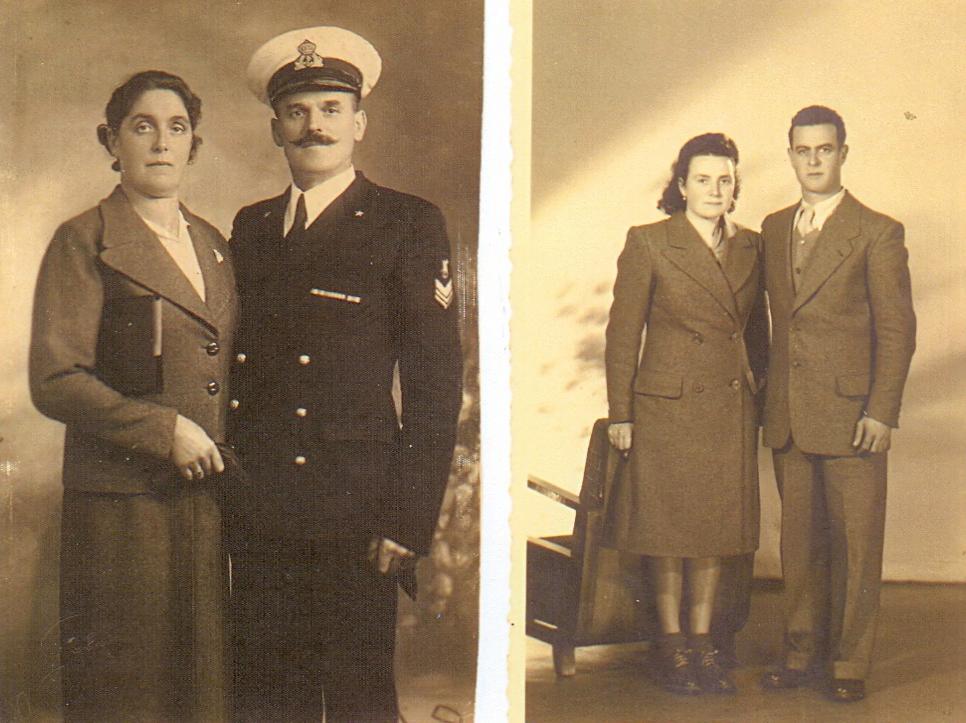
Born in 1890, Enrico Mostes married Giuseppina at a young age and in 1912 moved with his wife and brother to Lezzeno, where the family shipyard was founded – the very same shipyard that still operates today. After a few years the brothers chose different paths, dividing their respective shipbuilding businesses.
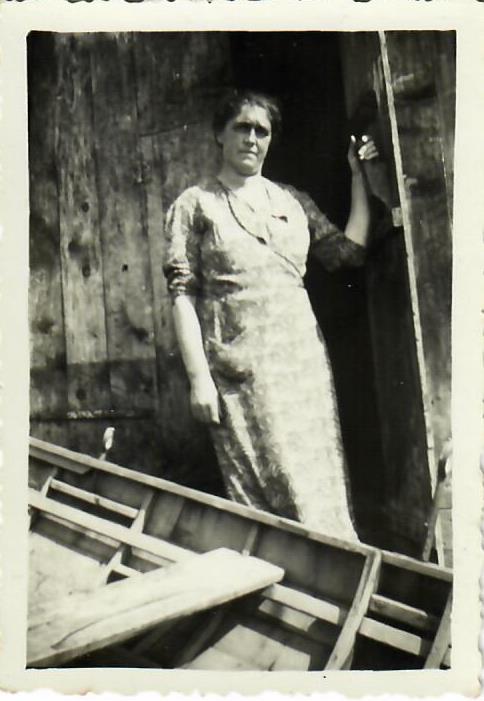
During this period Enrico was called to military service and took part in World War I in 1915 as a Navy Marshal, remaining at sea for nearly four years. In his absence, the shipyard continued its work thanks to the determination and strength of his wife Giuseppina. An educated and resolute woman, she embodied the classic matriarch: strict, yet capable of guiding the family enterprise with unwavering dedication.
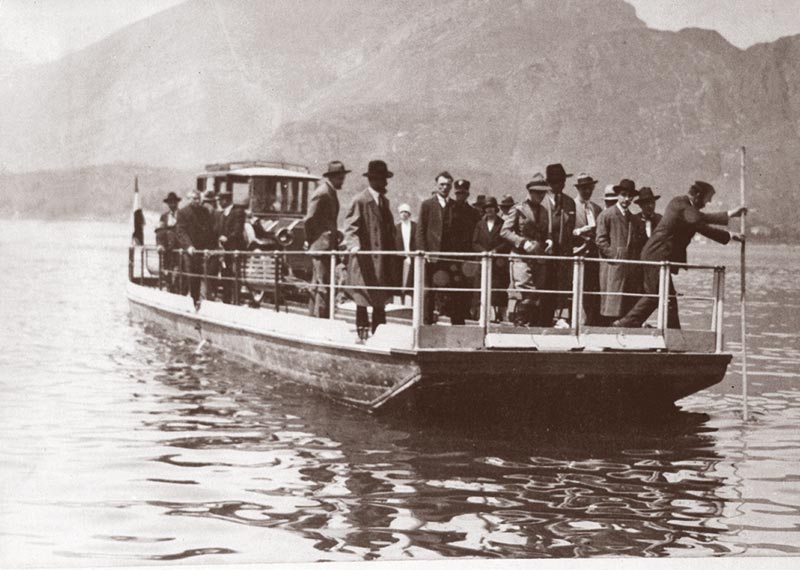
When Enrico returned from the war, he resumed his activity in the shipyard and in 1920, together with his brother, built a car ferry connecting Bellagio, Cadenabbia, and Varenna. Initially named “Mussolini,” the ferry was later renamed “Cadenabbia” following an unusual incident during the inauguration: the Bishop of Como insisted on personally driving his car during disembarkation and accidentally drove it straight into the lake. Upon hearing of the episode, Mussolini requested that the vessel be renamed to avoid any association with the mishap.
Meanwhile, Enrico and Giuseppina longed for a child. Unable to have one, they adopted a newborn boy in 1919, thanks to their friendship with Bishop Archi. The child was named Amos Matteri (then Amos Mostes). One year later Giuseppina gave birth to their son Fulvio, followed by their daughter Nemesia.
Amos grew up surrounded by the scent of timber and the rhythm of the lake. At just eight years old he began assisting his father in the shipyard, although his mother wished for him to pursue his studies. In 1937 he graduated from the “Ing. Emilio Prandoni” design school in Torno, bringing formal design knowledge into the family craft.
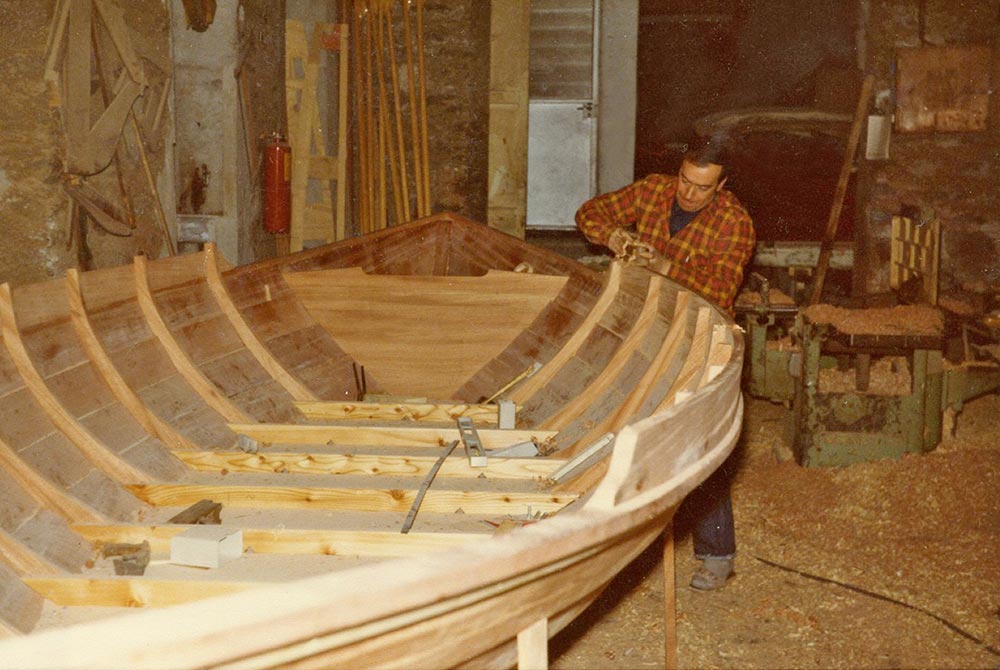
Soon Amos began building a wide range of traditional lake boats: batel (today known as Lucia), spingarde, burchi, burchielli, canotti, and quatrass. These were small vessels primarily used for fishing and transporting goods, while for the elegant leisure tourism of Lake Como production focused on the refined Inglesine. Each boat was crafted entirely by hand. At the time there were no modern tools: the village had only one sawmill, accessible solely by water, where logs were transported to be cut. Boatbuilding required patience, craftsmanship and deep knowledge of materials.
Repairs and restorations of comballi were also frequent. Due to their size, these vessels could not always be brought into the shipyard and were therefore hauled ashore and worked on directly on the beach using sophisticated supporting techniques that allowed craftsmen to operate on both sides and along the hull.
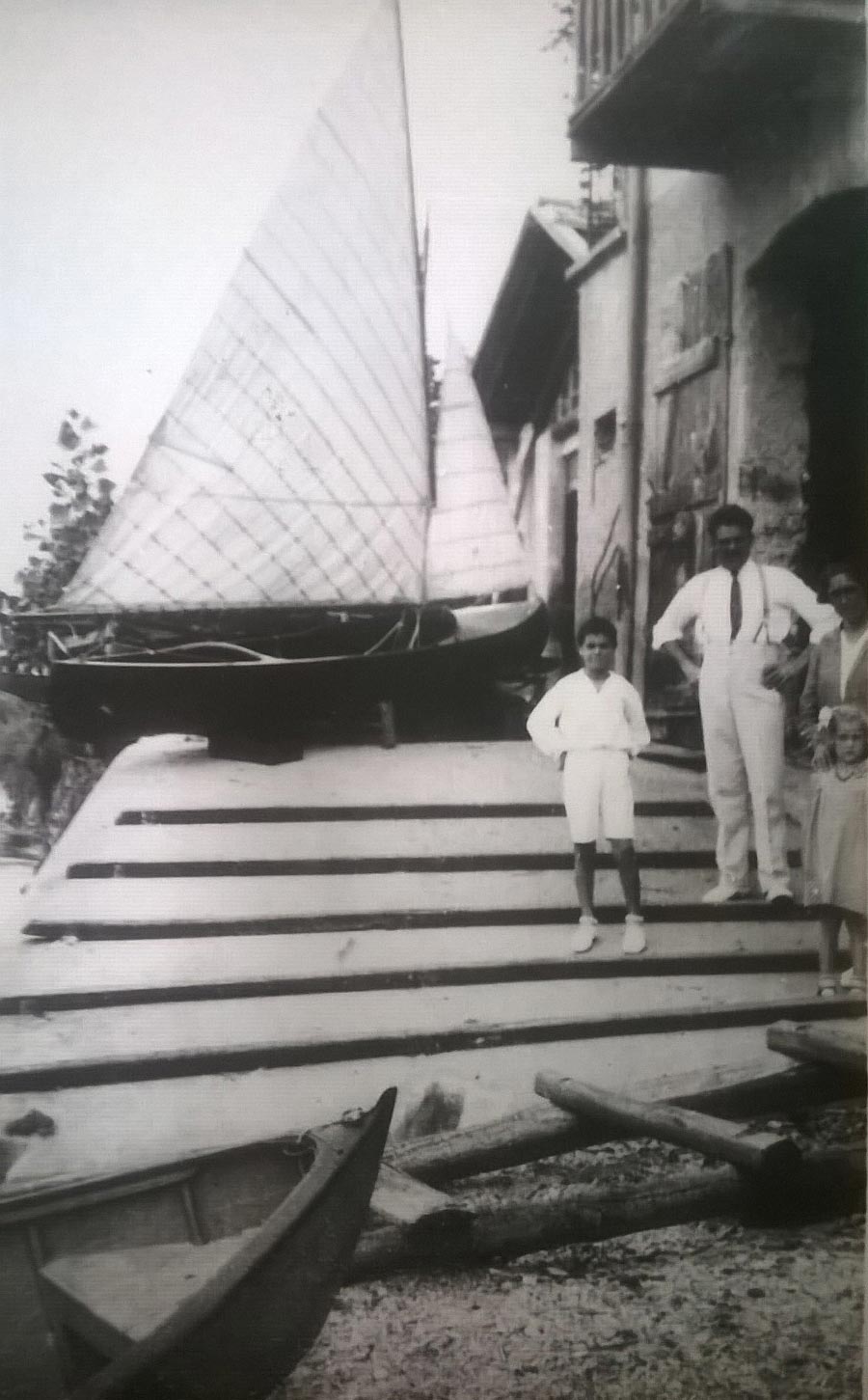
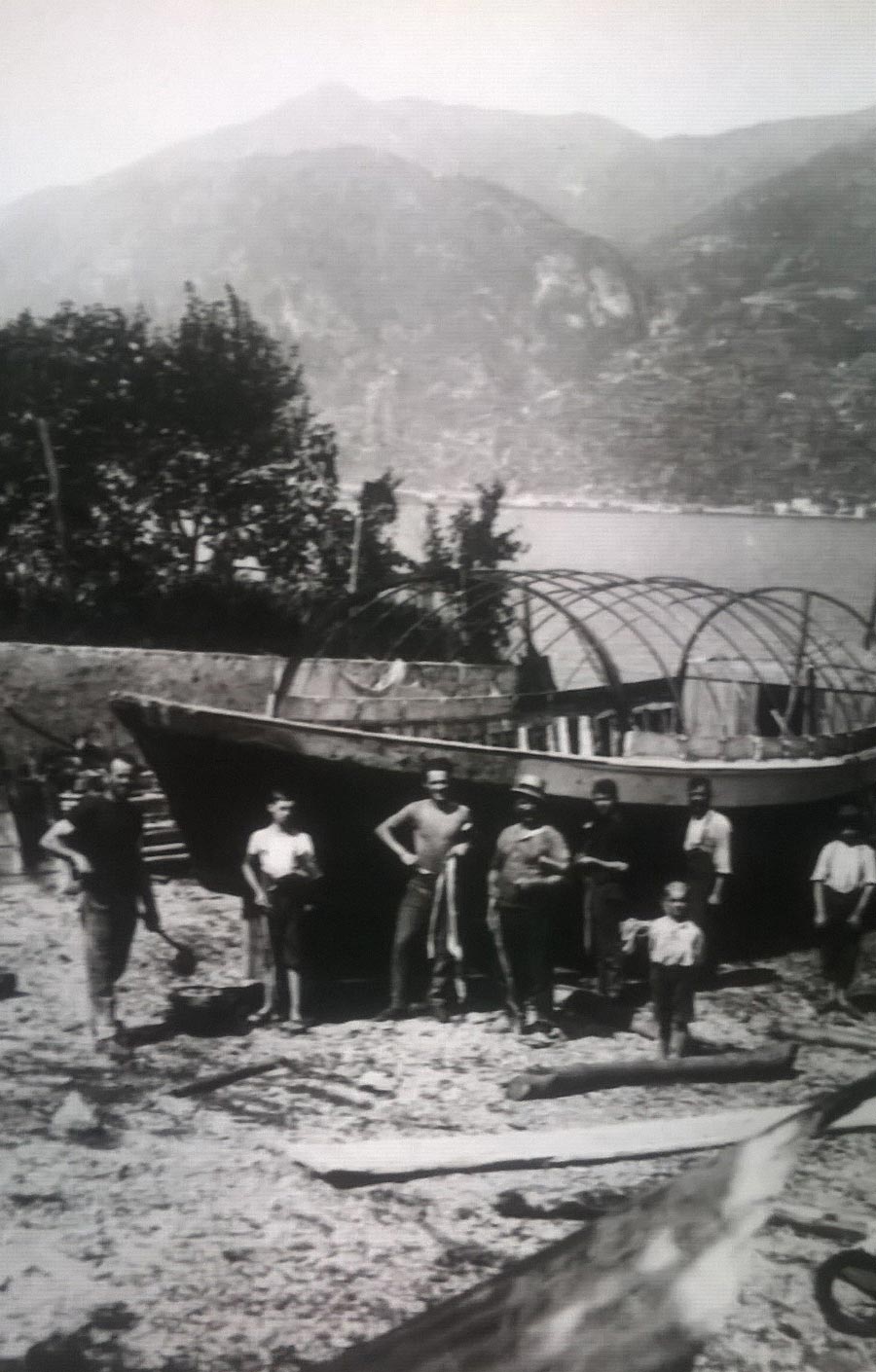
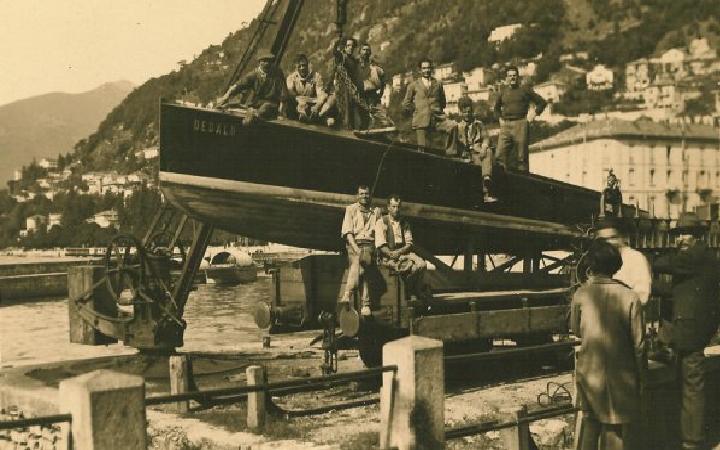
Enrico was highly regarded by the owners of the prestigious villas that lined the shores of Lake Como, who entrusted him with building the traditional boats of the lake. This reputation continued with his son Amos, admired not only for his craftsmanship but also for his discretion, humility and integrity.
The shipyard continued to grow until the outbreak of World War II. Enrico was once again called to serve as a Navy Marshal aboard the cruisers Eugenio di Savoia and Bolzano, while Amos received a draft notice that revealed an unexpected truth: the document bore the name of another man, Adolfo Matteri. It was at that moment that the reality of his identity emerged. Nevertheless, Amos continued to use the surname Mostes throughout his life, only passing on the true surname Matteri to his children.
Amos was sent to Albania, where he served for six years in the Pontieri Engineering Corps. For nearly two years there was no news of him. Eventually he returned on foot to Milan, where a friend gave him a bicycle to complete the journey home. When he finally arrived back in his village, the church bells rang for nearly two hours and the townspeople gathered in the streets shouting with joy: “Amos has returned!”
After the war, Enrico also dedicated himself to rebuilding the town of Lezzeno. He served three terms as mayor and founded the town’s schools, travelling even to Rome to secure the necessary authorizations and funding. Amos could then devote himself entirely to the shipyard, steering production toward pleasure boats, increasingly requested by international visitors – particularly British travellers – who had chosen Bellagio and Tremezzo as their favourite destinations on the lake. During the 1950s, the traditional Lucia boat was redesigned to meet evolving market demands and soon became the most sought-after model, establishing itself as the symbol of the Matteri shipyard throughout Europe.
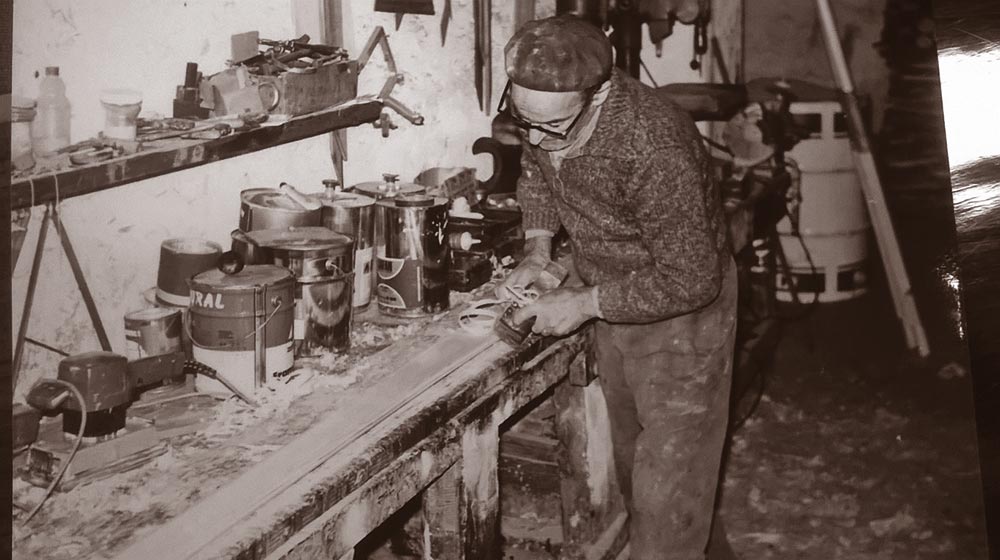
Between the 1950s and the 1970s, other iconic models were created, including the Burchiello, a flat-bottom fishing boat ideal for lakes and rivers, and the Spingarda, traditionally used for wild duck hunting. Today these vessels are considered rare collectors’ pieces.
The legacy of Amos was carried forward by his son Erio Matteri, who became owner of the shipyard in 1979, renaming it Cantiere Nautico Erio Matteri. Alongside the construction of classic wooden boats, he introduced new fiberglass models enriched with handcrafted wooden finishes.
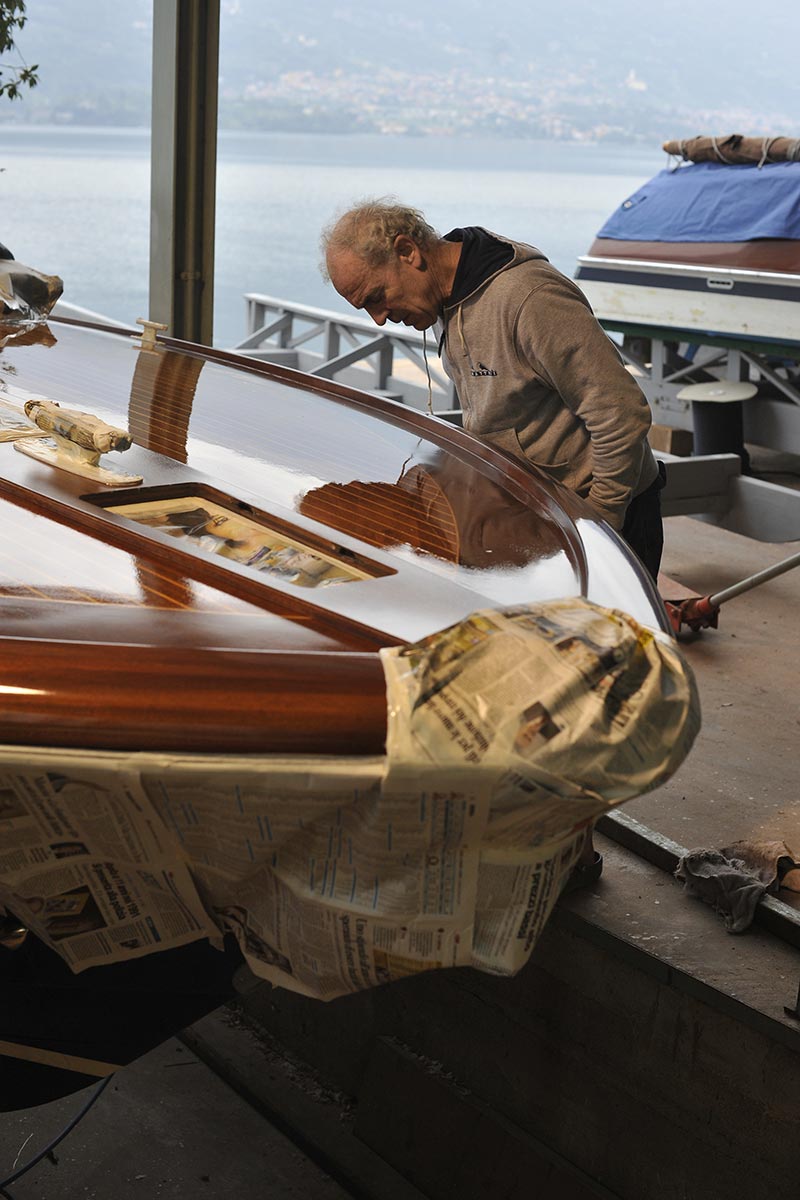
During the 1980s and 1990s, Erio became one of the pioneers of electric navigation on Lake Como. His motor launch “Lo Spirito di Volta,” dedicated to the scientist Alessandro Volta, was among the first electric boats ever launched on the lake. Today the shipyard builds zero-emission boats and gondolas, with around forty electric vessels already produced. In those same years, Erio recognized the timeless value of the legendary Riva boats. At a time when many were abandoned due to maintenance costs, he began collecting and restoring them, transforming the shipyard into an international reference point for enthusiasts and collectors of these icons of Italian boating.
By the end of the 1990s, a large lakeside storage facility capable of hosting around sixty boats had been built.
In the 2000s, the Riva Experience was created, leading the shipyard to collaborate with major international film productions. The most notable moment came in 2004, when several boats were featured in the film Ocean’s Twelve, starring Brad Pitt, George Clooney, and Matt Damon.
In 2023, as the culmination of a long-standing collaboration with the Ferretti Group, the first Riva Private Deck in Italy—and the second in the world—was unveiled on the shores of Lake Como, at the Yacht Club Eriolario. An exclusive setting that epitomizes the timeless elegance and values of the Riva brand, while preserving and reinterpreting the historic legacy of the Matteri shipyards. A refined retreat reserved for owners and connoisseurs, where nautical heritage, sophistication, and passion converge in a truly distinctive experience.
Today the Yacht Club Eriolario owns one of the most captivating fleets of historic motorboats in the world.
Over the years, Erio Matteri has held numerous prestigious roles, including technical commissioner of the Automotoclub Storico Italiano, member of the scientific committee of the Museo della Barca Lariana, judge of elegance at Lake Tahoe, and founder of the National Association of Master Shipwrights.
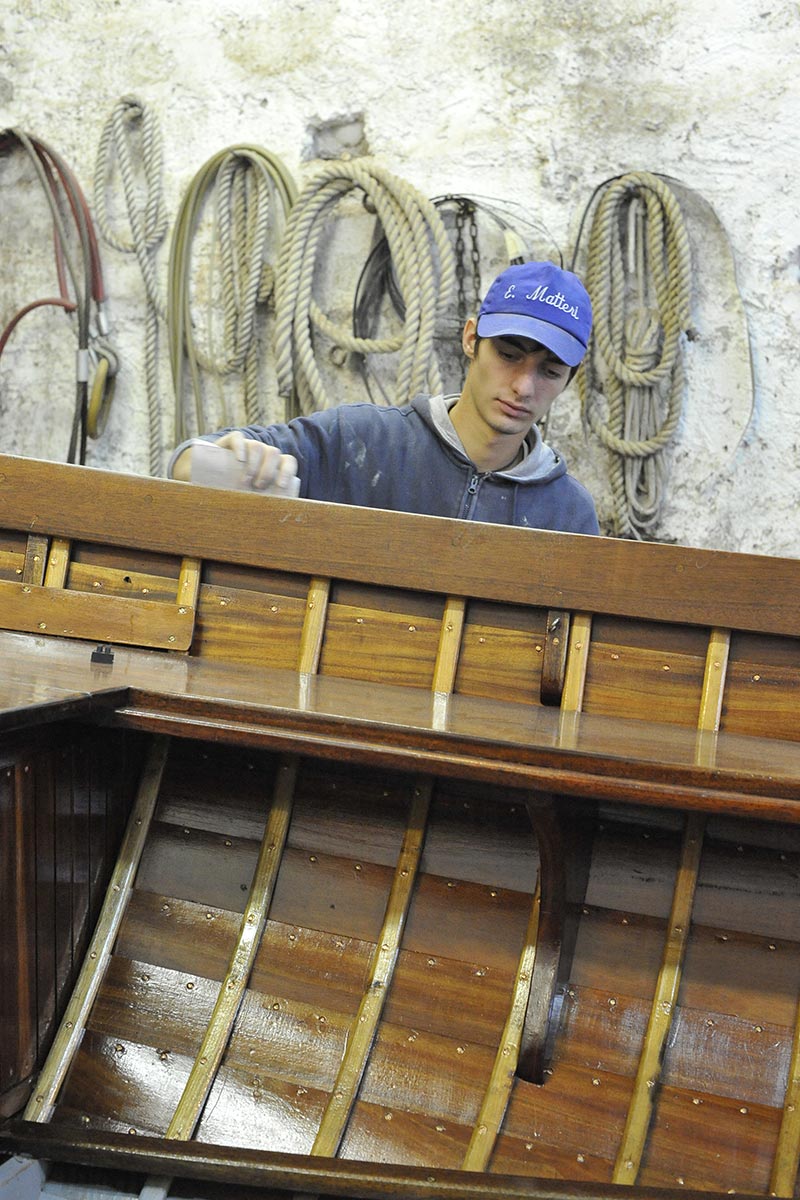
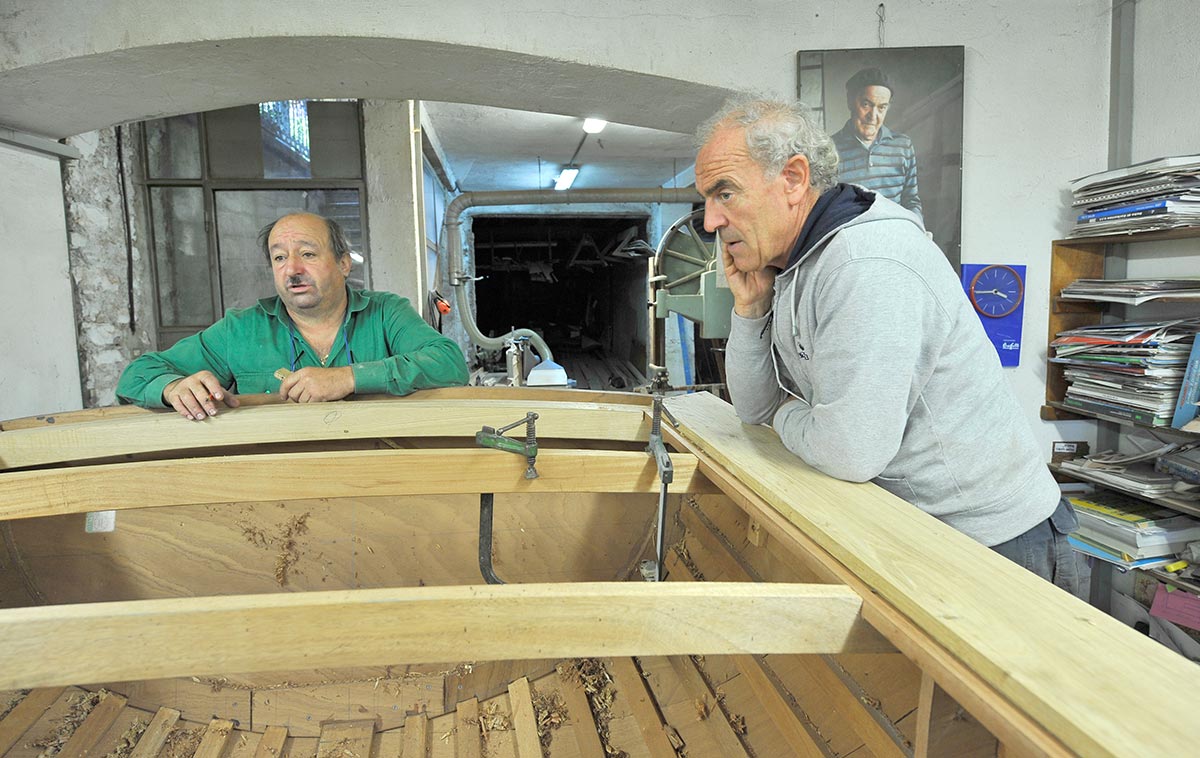
Today the story continues with the new generation. Francesca Matteri now manages Yacht Club Eriolario Srl, choosing after her law degree to carry forward the family tradition alongside her parents, Erio and Paola. Her brother Amos Matteri works as an architect in Melbourne, while remaining actively connected to the family business. Even today, the company remains profoundly family-run and artisan-driven, faithful to its decision to avoid industrial mass production. A philosophy that allows the Matteri shipyard to create fully bespoke boats, preserving the same passion, craftsmanship and dedication that began almost two centuries ago on the shores of Lake Como.
Sorry, the comment form is closed at this time.