

Sustainable boating
At Matteri, our love for Lake Como goes hand in hand with a long‑standing commitment to environmental responsibility and sustainable boating practices. We believe that the lake’s pristine waters and fragile ecosystem should be preserved for generations to come, and this belief is deeply woven into our traditions, innovations, and the way we operate every day.
A legacy of early innovation
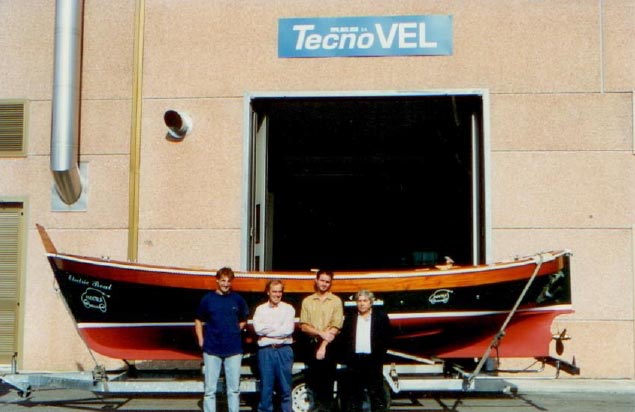
Long before sustainable travel became a global movement, Matteri was already exploring new ways to blend craftsmanship with ecological consciousness. Amos, son of Erio, was the first person in the world to water ski behind an electrically powered boat in 1993: The Spirit of Volta. Starting in the 1980s, the first fully electric and hybrid boats were built through collaborations with leading industry groups. We continually explore ways to reduce emissions, improve energy efficiency, and minimize environmental impact while preserving the integrity and beauty of classic wooden boats. Whether restoring vintage vessels or managing our fleet, every Matteri project reflects respect for nature as well as commitment to excellence.
Lake Como’s crystal‑clear waters and breathtaking landscapes are among the world’s most precious treasures: and they deserve to be protected. By embracing sustainable boating principles, we aim not only to safeguard this environment but also to offer experiences that are as meaningful as they are unforgettable.
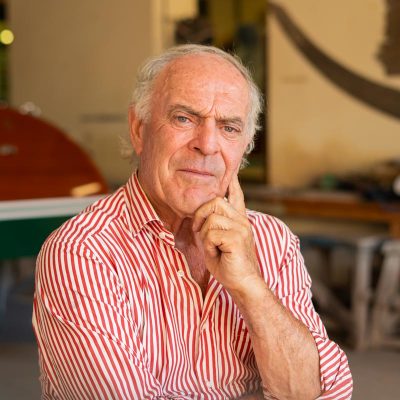
Erio Matteri,
a story of passion for electric boats
The dream I’ve had since I was a child was to build a clean boat, one that made no noise, didn’t pollute, and created very little wake. Over the years, I added another idea to that vision: it should also consume very little energy.
When I was young, most of the boats built by my father were rowboats. At the time, contacts with other countries were more limited, and by the late 1950s motorization on the lake was still developing. We mainly built traditional boats from Lake Como, such as the romantic Lucia, named after Lucia Mondella from Manzoni’s novel, — although its original name was Batèl—as well as inglesine, comballi, Larian gondolas, navett and burchielli boats. These were boats used mostly for work.
At the same time, when I was a boy, the so-called “racing boats” were very popular. They made an incredible amount of noise, and I won’t deny that for a few years I was fascinated by them too. But in the end, my true passion quickly brought me back to my father, who had never abandoned the beautiful traditional boats of the lake.
The Spirit of Volta
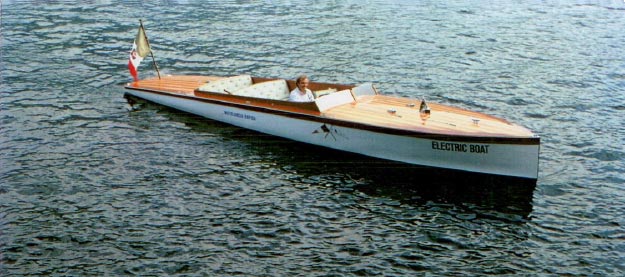
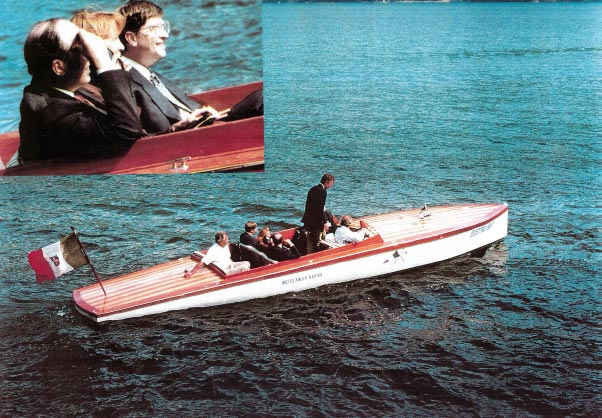
Spirito di Volta (“The Spirit of Volta”), the first tangible concept of an electric boat, was designed in 1988 and later built in 1990. It was perhaps the most challenging project, because at that time the idea of ecology was still quite abstract, especially in the boating industry.
The idea of creating a zero-environmental-impact boat was not easy, precisely because market demands in those years were very different: boats with engines capable of reaching high speeds and racing across the water, powered by extremely noisy motors.
To most people, my idea seemed like pure madness. In fact, when Bill Gates stepped aboard the Spirito di Volta (“the Spirit of Volta”), a journalist even asked me whether having electric power on the water might be dangerous.
In a way, the question may not have been entirely foolish, but it clearly showed how an electrically powered boat was perceived at the time.
When this motor launch was built, the main partners involved were Ansaldo Group, the Bicocca Technology Incubators and Magneti Marelli. Over the years, we also collaborated with VEL and MES in Mendrisio and Citelec in Brussels, as well as AFBE (the French Electric Boat Association), organizations that promoted nautical products alongside electric cars. In those years, especially in France, Switzerland and the Netherlands, environmental issues were already more widely felt. We took part in conferences throughout Europe.
Pioneers of Electric Boat Models
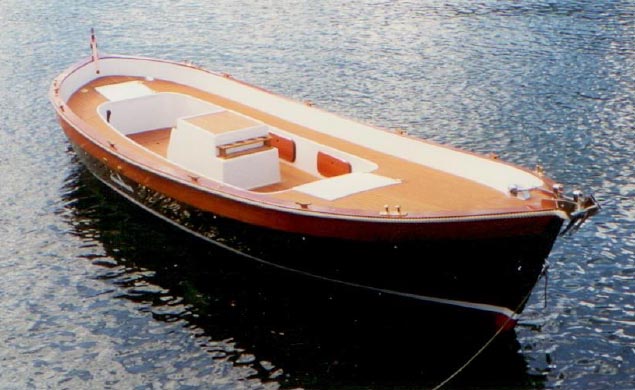
The most requested models are gozzi and smaller gozzetti, traditional boats from the Italian maritime heritage. Originally designed as coastal fishing boats, they later became highly appreciated leisure crafts. Our models feature a large sun deck, which allows the batteries to be positioned underneath, distributing the weight evenly throughout the hull.
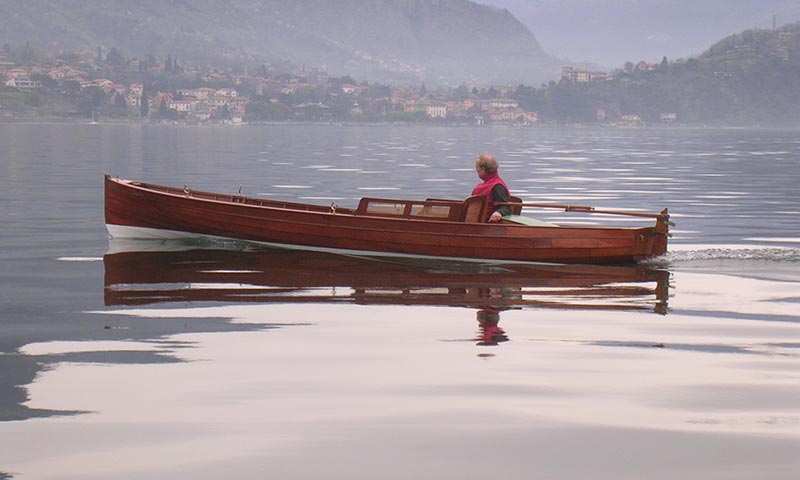
In addition to gozzi and launches, we have also worked on inglesine. One example is Virginia, which was electrified around the mid-1990s. The most interesting aspect of this project was combining a vintage boat design with a modern technological engine, a unique and fascinating blend. Virginia itself dates back to around the 1920s. The owner asked me to find a solution that would preserve the beauty and originality of his boat while sparing him from having to row everywhere, so I did not hesitate to design an electric propulsion system.
The system installed on Virginia, conceived about 20 years ago during the experimental phase, still allows the boat to glide across the waters of Lake Como today in complete silence.
The Challenge of Electric Propulsion
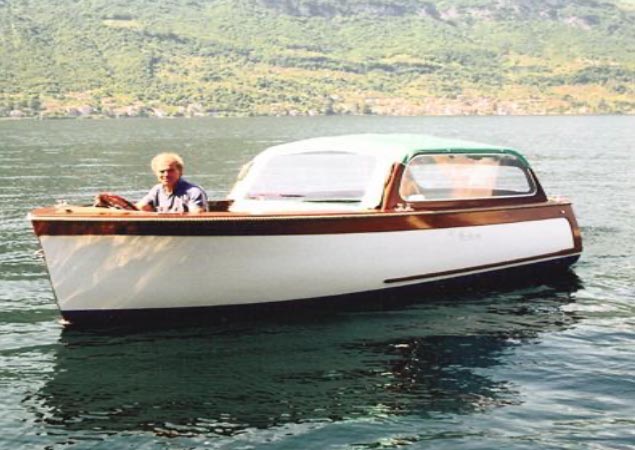
Around 2001, I built a tender for a yacht on commission from two clients, which we called Eta Beta. It was a hybrid boat, powered by both an electric motor and a diesel engine. Designing this type of vessel was not easy, especially because at that time the electrical and electronic components of the motor were bulky, expensive and not very efficient.
The batteries, exclusively lead-acid at the time, also sometimes posed challenges due to their weight and size, particularly when re-motorizing existing hulls. These boats had not originally been designed to accommodate batteries, which is something that must be taken into account when designing a new vessel.
Not all existing boats are suitable for electric propulsion, for example because of the shape of the hull. Fortunately, thanks to developments in the market, this issue has improved considerably today. These were the models that most strongly marked our production in the ecological field, boats that were always built, or at least motorized, specifically on commission from individual clients.
The Electric Catamaran
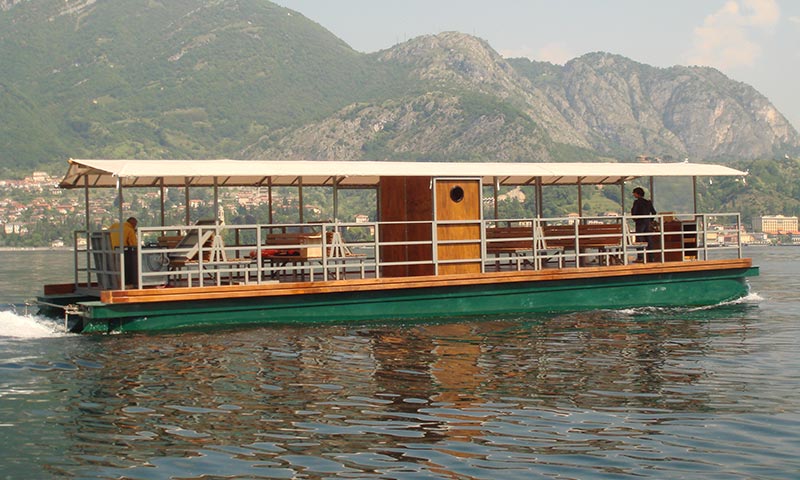
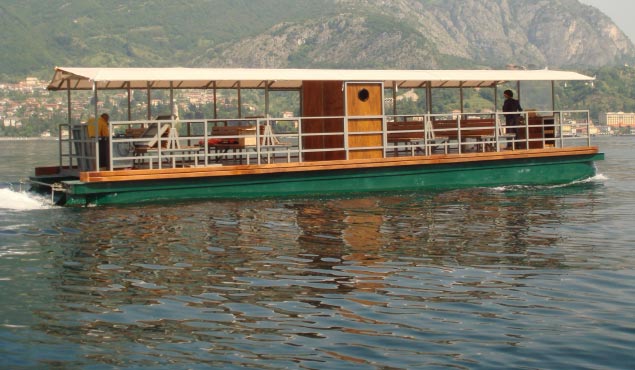
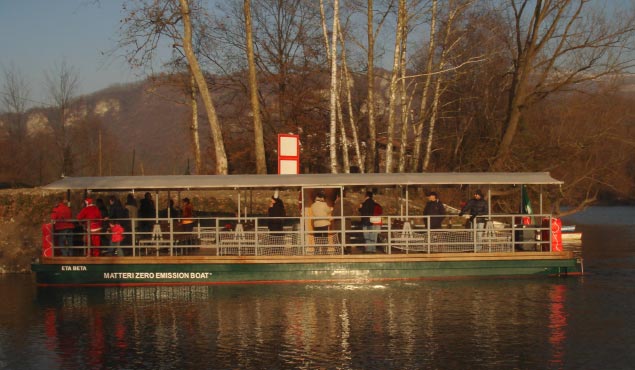
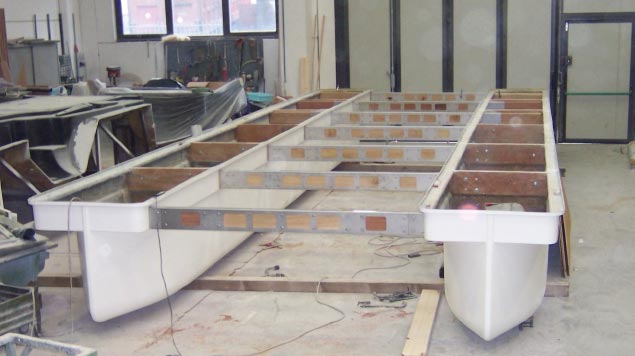
In 2007, I took on a challenge with the public sector: the design and construction of a zero-emission catamaran capable of carrying up to 60 people. The project had been commissioned in 2005 by the Adda Natural Park.
The hull, made up of two pontoons, was built using vacuum-infused composite materials to reduce weight, and it features a very lightweight superstructure in marine-grade aluminum. This design choice was driven by the need for minimal draft, due to the shallow waters of the Adda River.
The propulsion system consists of two 10 kW electric motors, specifically designed for this type of ferry and water-cooled. The battery system allows the catamaran to reach a speed of 8 knots at full load, with an operating range of approximately six hours.
Research and Development Continue to This Day
The Spirito di Volta, which I mentioned earlier and which is owned by the shipyard, is currently being re-motorized with more advanced technologies and higher voltages. In fact, it is the boat I use for various experiments.
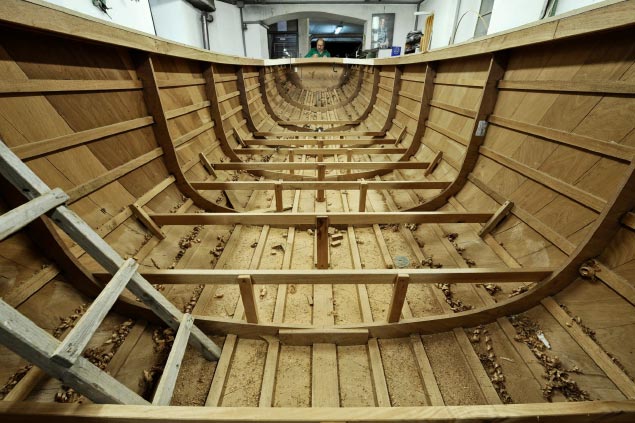
The current prototype, now nearing completion, is inspired by a model from the early 1900s. It is 10 meters long and 2.20 meters wide, with a capacity of about 12–15 people. It will be powered by a 16 kW motor, also specially built and equipped with a heat exchanger for cooling. On this hull we will be able to install traditional batteries, thereby keeping costs down, since the particular shape of the hull allows me to load up to 22 quintals of batteries.
Paradoxically, in order to navigate today with zero environmental impact, we must take inspiration from the past. In fact, the challenge we face today with electric propulsion is the same one that arose a hundred years ago with internal combustion engines.
Finally, A.I.B.E.
My wife Paola, who has supported my projects over the years, founded A.I.B.E., the Italian Electric Boats Association in 2001, with the aim of promoting, sharing, and spreading recreational boating powered by non-polluting propulsion systems. Today, many young people—highly sensitive to environmental issues—have joined the association.
Our goal is to promote a working product born from many years of experience, experiments, attempts, disappointments and achievements. My models do not begin as drawings on paper; from the very start they become concrete projects through the creation of scale models.